Top Activated Carbon Filter Sheet Suppliers?
Choosing among the top activated carbon filter sheet suppliers requires more than comparing prices. Performance depends on carbon source, pore structure, binder chemistry, airflow resistance, and manufacturing consistency. A sheet that looks dense may adsorb poorly. Another may perform well initially but lose capacity quickly in humid air.
Grand View Research valued the global activated carbon market at approximately USD 5.1 billion in 2023. Its report also forecasts strong growth through 2030. MarketsandMarkets presents a similar upward trend, although its market estimates differ. These differences matter. They show that market figures depend on product boundaries, regions, and data methods. Public reports rarely isolate the activated carbon filter sheet segment clearly.
Technical judgment remains essential. Joseph C. Crittenden, a recognized environmental engineering authority, has stated, “Adsorption is a surface phenomenon.” That simple point explains why iodine number alone cannot select the best supplier. Buyers should examine BET surface area, pressure drop, carbon loading, moisture resistance, and VOC removal data. They should also request lot-to-lot test records.
Look closely.
The strongest suppliers usually provide traceable raw materials, controlled lamination processes, and application-specific samples. Independent laboratory results add confidence, especially for air purification, respirators, HVAC panels, and industrial odor control. Certifications can help, but they do not replace performance testing under real operating conditions.
This comparison will examine leading suppliers through technical capability, documented quality, customization, production scale, and service reliability. It will not treat every ranking as permanent. Supplier claims can be incomplete, and published data can become outdated. That limitation deserves attention. A careful buyer should validate each shortlisted sheet before making a long-term purchasing decision.
What Are Activated Carbon Filter Sheets?
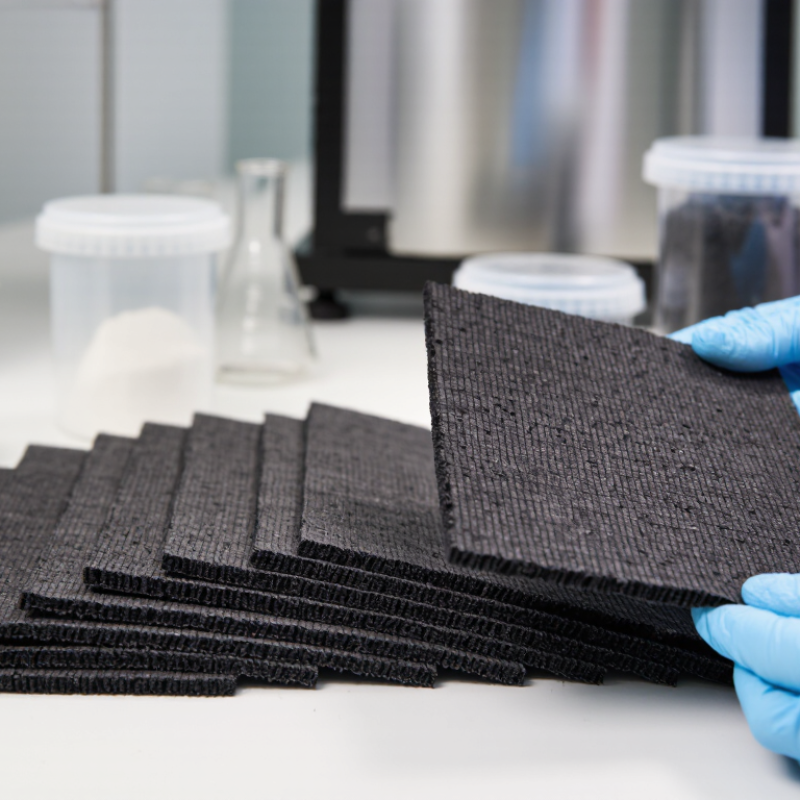
activated carbon filter sheets are thin, porous media that combine activated carbon with a supporting layer, such as nonwoven fiber, cellulose, or polymer mesh. The carbon captures many gases, odors, and organic vapors through adsorption. It does not simply “absorb” them. The air must contact enough carbon for long enough.
The U.S. Environmental Protection Agency explains that gas-phase filters do not have one universal performance rating like particle filters. This matters when comparing suppliers. A sheet with high carbon loading may perform better, but thickness, airflow, humidity, and target chemicals also change results. A 2021 World Health Organization guideline sets annual PM2.5 exposure at 5 µg/m³. Activated carbon alone cannot reliably remove fine particles, so a separate particle layer is usually necessary. That detail is often missed.
Look for test data showing carbon weight per square meter, pressure drop, adsorption capacity, and service life. ASTM-based testing can improve comparison, although laboratory results rarely mirror a dusty kitchen or a damp workshop. I would not treat iodine number as a complete VOC rating. It is useful, but incomplete. Good suppliers should identify the carbon type, sheet construction, airflow range, and testing conditions. Without those details, a polished specification may still hide weak real-world performance.
How Activated Carbon Filter Sheets Work
Activated carbon filter sheets work through adsorption, not ordinary sieving. Their carbon surface contains millions of microscopic pores. These pores attract many organic molecules, odors, and chlorine-related compounds. As air or water passes through the sheet, contaminants move from the fluid into the carbon structure.
The pore size matters. Micropores capture smaller molecules, while larger pores improve flow and access. Contact time matters too. A fast-moving stream may leave contaminants behind. The U.S. Environmental Protection Agency’s drinking-water treatment guidance identifies granular and powdered activated carbon as effective options for many taste, odor, and organic contaminant concerns. However, performance depends on carbon type, thickness, humidity, and contaminant concentration. Thicker is not always better.
For air filtration, the World Health Organization reported 3.2 million premature deaths linked to household air pollution in 2020. That figure explains the practical value of adsorption-based filtration, but it does not prove that every carbon sheet provides equal protection. The sheet may become saturated quietly. There may be no obvious smell. Regular replacement remains essential. A 2023 EPA technical review also stresses that adsorption capacity changes with competing contaminants and operating conditions. Testing should therefore include pressure drop, removal efficiency, and service life. Real-world dust loading can reduce airflow sooner than expected. This is where product claims deserve careful questioning.
Key Criteria for Comparing Filter Sheet Suppliers
Top Activated Carbon Filter Sheet Suppliers?
Key Criteria for Comparing Filter Sheet Suppliers
Choosing a filter sheet supplier requires more than comparing catalog prices. Review the carbon type, sheet thickness, pore structure, and binder composition. These details affect adsorption capacity, flow rate, and pressure drop. Ask for current technical data, not generic product claims. A reliable supplier should provide batch records, test methods, and traceable raw material information. Look for measurable results.
Request samples from several production batches. Test them with the liquid or gas used in your process. Check iodine value, moisture, ash content, extractables, and microbial control where relevant. The sheet must fit your equipment without tearing, swelling, or releasing loose particles. Clean packaging matters. So does storage guidance.
Supplier experience becomes visible during technical discussions. Can their engineers explain performance changes after humidity exposure? Can they adjust dimensions without weakening the sheet? Clear answers indicate practical knowledge. Independent laboratory reports add confidence, but certificates should match the actual product and batch. Read the small details. A polished document can still hide missing test conditions.
Cost needs careful interpretation. A cheaper sheet may clog faster and increase replacement labor. A premium sheet may not suit every application. I have seen specifications look impressive while real filtration results remained disappointing. That is why pilot testing should guide the final choice. Keep records of flow, pressure, service time, and filtration quality. Recheck those results when the supplier changes materials.
Top Activated Carbon Filter Sheet Suppliers? Key Criteria for Comparing Filter Sheet Suppliers
This illustrative procurement model assigns higher priority to filtration performance, regulatory compliance, and production consistency. Buyers should adjust the weighting according to application requirements, validation standards, order volume, and delivery conditions.
Types of Activated Carbon Filter Sheet Suppliers
Top Activated Carbon Filter Sheet Suppliers?
The market includes direct manufacturers, converting specialists, distributors, and custom filtration suppliers. Direct manufacturers usually control carbon loading, fiber selection, and sheet thickness. This can improve batch consistency and technical traceability.
Converting specialists purchase base media, then cut, laminate, pleat, or frame it for specific equipment. They suit buyers needing unusual dimensions or quick modifications.
Distributors offer broader access and smaller order quantities. They may serve maintenance teams replacing sheets in air purifiers, laboratory systems, or industrial ventilation units. Custom engineering suppliers can adjust pressure drop, adsorption capacity, moisture resistance, and mounting details. Ask for test data, not only attractive performance claims. Useful documents include material specifications, airflow results, carbon content, and quality-control records. A supplier’s experience with similar operating conditions matters. Still, paperwork can hide practical weaknesses. Sample testing remains important.
Tips: Compare suppliers by application, not price alone. Check the sheet under real airflow and humidity. Measure pressure loss after installation. Confirm dimensions carefully; a few millimeters can cause bypass leakage. Ask how storage affects carbon performance. Review replacement intervals and disposal guidance. If a supplier avoids technical questions, reconsider the purchase. I would also request two production samples, because one sample may look better than the normal batch. Supplier audits are useful, but they cannot replace hands-on testing.
How to Select the Best Supplier for Your Application
Top Activated Carbon Filter Sheet Suppliers?
How to Select the Best Supplier for Your Application
Choosing an activated carbon filter sheet supplier requires more than comparing price per roll. The Global Activated Carbon Market was valued at about USD 4.8 billion in 2023, according to Grand View Research, showing strong demand but also wide quality variation. Ask suppliers for batch-level certificates, carbon source, iodine number, moisture content, basis weight, thickness, and pressure-drop data. These figures reveal whether the sheet matches your equipment.
Application testing matters most. For air filtration, request data for volatile organic compounds, airflow, humidity, and breakthrough time. For water treatment, examine flow rate, contact time, extractables, and microbial-control procedures. EPA technical guidance confirms that carbon performance changes with contaminant type, temperature, and competing chemicals. A supplier offering only one general removal percentage is not enough.
Look for proof.
Reliable suppliers should provide samples, test methods, and traceability records. Independent laboratory verification adds credibility, especially for food-contact or drinking-water applications. Also inspect production controls, storage conditions, and packaging. Carbon can absorb moisture and nearby odors before installation. That detail is often ignored. My practical concern is simple: laboratory results may look excellent, yet a sheet can fail after pleating, sealing, or repeated loading. Require pilot trials under real operating conditions, and document every change before approving a long-term supply agreement.