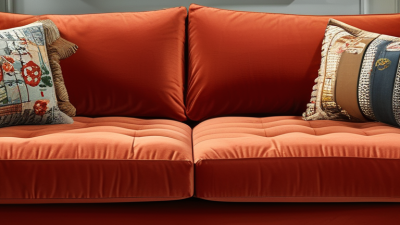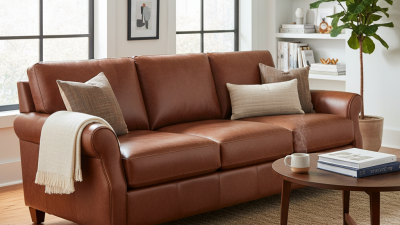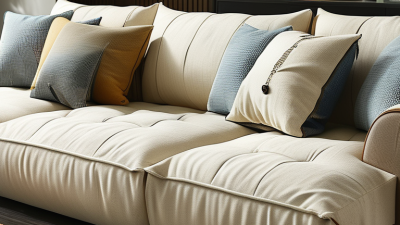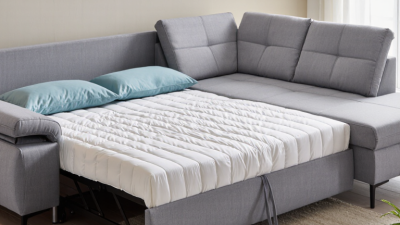
A queen sleeper sofa is more than a wide couch with a hidden bed. It is a compact sleeping solution for apartments, guest rooms, studios, and busy family spaces. When opened, a sleeper sofa queen usually provides a mattress close to queen size. The exact dimensions vary, so checking measurements matters before ordering.
Interior designer Libby Langdon explains the basic goal clearly: “A sleeper sofa should look good, sit well, and sleep comfortably.” That standard sounds obvious. It is not always easy to achieve. A sofa may feel soft during a short showroom visit, yet its mattress can feel firm, thin, or uneven overnight. Personal testing still matters.
Look closely at the frame, mattress thickness, opening mechanism, and seat depth. Measure the room with the bed fully extended. Leave walking space near the foot and sides. Check whether the sofa passes through doorways, elevators, and narrow hallways. These small details can prevent an expensive mistake.
A reliable sleeper sofa queen should support daily sitting without making overnight guests feel forgotten. Memory foam may reduce pressure, while innerspring designs can offer stronger airflow and bounce. Neither choice works perfectly for everyone. That is the part many buying guides simplify too much.
This article explains what a queen sleeper sofa is, how it operates, and which features deserve careful attention. It also considers comfort, maintenance, room planning, and realistic guest use. A stylish sofa is helpful. A sofa that guests can actually sleep on is better.
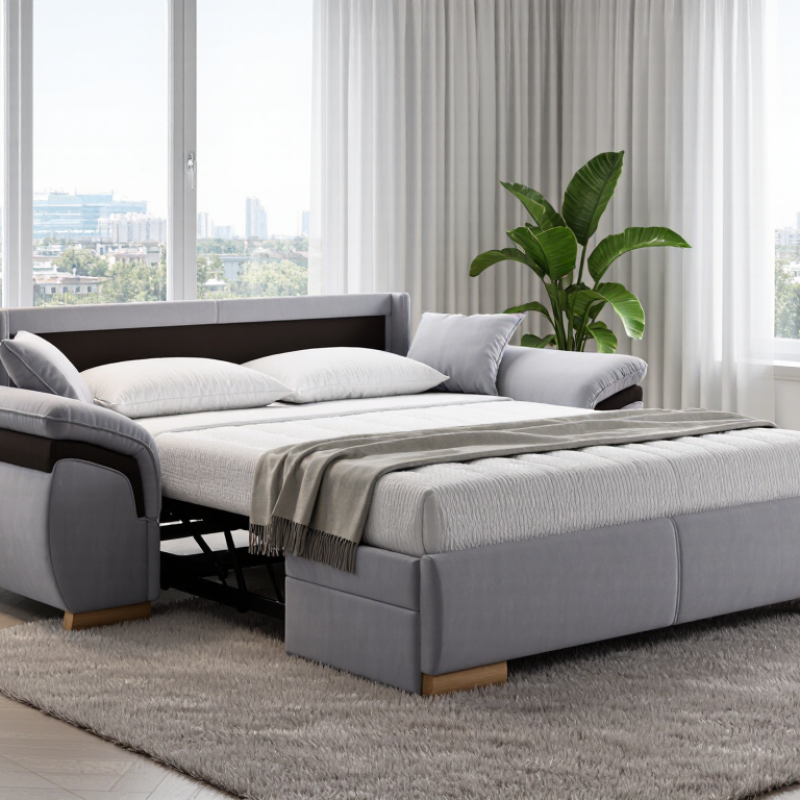
A queen sleeper sofa is a sofa that opens into a bed with a queen-size sleeping surface. Its standard mattress measures about 60 inches wide by 80 inches long. That size gives two adults more room than a full sleeper sofa. However, the sofa itself is wider, deeper, and heavier than the mattress.
The 60-by-80-inch measurement describes the sleeping area, not the complete furniture footprint. A sleeper sofa may need 85 to 95 inches of wall space, depending on its arms and frame. Allow extra room in front for the mattress to unfold. Measure the doorway, hallway, and intended room before delivery. This practical step prevents an expensive surprise.
Mattress thickness and support can differ between models. Some use foam, while others use innerspring construction or a combination of materials. Lie on the opened bed, if possible, and check whether the center feels firm. I once focused too much on sofa comfort and overlooked the sleeping surface. That was a useful mistake. Also, confirm the exact mattress dimensions because “queen” can allow small variations. Fitted sheets may fit poorly when corners are unusually rounded. A tape measure provides more reliable information than a product label alone. Look for a stable opening mechanism, even weight distribution, and enough clearance around the bed for safe movement.
A queen sleeper sofa combines everyday seating with a hidden queen-size sleeping surface. Beneath the cushions, a folded mattress rests on a metal or reinforced support frame. When you remove the seat cushions and pull the front handle, the frame extends outward. Its sections unfold until the mattress forms a flat sleeping area. The sofa’s back usually stays in place, creating a stable headboard-like surface.
The mechanism should move steadily, without scraping, sticking, or sudden drops. A properly fitted frame distributes weight across several support points. However, the mattress may feel firmer than a traditional bed because its thickness must fit inside the sofa. Foam can soften slightly with use, while thin innerspring designs may transfer more movement. It is not always a perfect replacement for a dedicated bed. A trial setup reveals more than measurements alone.
Tips: Measure the room with the bed fully open, not only in sofa mode. Leave walking space around the extended frame. Pull the mechanism evenly from the center handle. Never force it if fabric catches underneath. Check that the legs lock securely before sleeping. A mattress protector helps control moisture and reduces wear. Rotate the removable mattress periodically, if the design allows it. Loose cushions can also shift during folding, so store them away from the moving frame.
What Is a Queen Sleeper Sofa?
Queen Sleeper Sofa Dimensions, Seating Capacity, and Room Requirements
A queen sleeper sofa combines everyday seating with a pull-out queen bed. Its mattress usually measures 60 by 80 inches. The sofa itself often spans 80 to 90 inches wide, with a depth of 35 to 40 inches. Exact dimensions vary by frame and cushion design.
Most models seat three adults comfortably, although two people have more elbow room. When opened, the bed can extend 80 to 90 inches into the room. Leave at least 24 to 30 inches of walking space beside the mattress. A narrow walkway can make nighttime use awkward. It is easy to underestimate this clearance.
Measure the sofa, doorway, hallway, elevator, and stair turns before buying. Record the ceiling height near tight corners, too. In a small living room, position the sofa against the longest wall. Keep coffee tables lightweight or movable. A room around 12 by 14 feet often handles this furniture more comfortably, but layout matters more than a fixed number. A thick mattress may improve sleep quality while reducing folded-bed space. That trade-off is easy to miss. Check the open depth, arm width, and mattress support rather than relying on the listed seating size alone.
A queen sleeper sofa is a sofa with a built-in folding bed designed around a queen-size mattress. The chart uses representative planning dimensions in inches; exact measurements vary by construction. A queen sleeper typically seats three people and needs additional clearance in front when the bed is opened.
Room-planning guide: Plan for approximately 90 inches of sofa width, 40 inches of sofa depth, and 94 inches of total front-to-back depth when the bed is open. Keep at least 30–36 inches of clear walkway space around the sofa whenever possible.
A queen sleeper sofa usually opens into a bed measuring about 60 by 80 inches. Its mattress determines much of the sleeping experience. Innerspring mattresses feel familiar and ventilate well, but their coils may transfer movement. Memory foam reduces motion and cushions pressure points. However, it can retain heat in poorly ventilated rooms. Hybrid designs combine foam and springs, though their extra thickness may not fit every mechanism. Always measure the folded mattress space before replacing it.
The frame affects both comfort and service life. Steel mechanisms offer consistent support and precise movement when properly aligned. Hardwood frames can feel solid, especially around the arms and base. Engineered wood may perform well, but weak joints or thin panels can loosen under repeated use. Check the hinges, welds, screws, and support legs. A smooth opening action matters more than a heavy appearance.
Weight ratings require careful reading. Some specifications cover the mattress and sleepers together; others describe only the seating capacity. The rating may also assume evenly distributed, static weight. Sitting heavily on one edge creates greater force than lying across the center. That distinction is easy to miss. In practical inspections, I look for a clearly stated total capacity, stable legs, and a locking mechanism that does not flex. Ratings vary by construction and testing method. When details are vague, choose conservatively and avoid treating a sofa’s weight as proof of bed strength. Even careful guidance has limits.
A queen sleeper sofa combines everyday seating with a hidden queen-size bed. Its mattress usually measures about 60 by 80 inches, though frame designs vary. In a small apartment, it can replace a sofa and guest bed without using another room. I have found the best models useful during short visits, especially when guests need a real sleeping surface. The benefit is practical, not magical. A sleeper sofa remains heavier and less flexible than a standard sofa.
Comfort is the main limitation. Some pull-out mattresses feel thin, while others create a ridge at the center. Sofa cushions may also soften unevenly after regular use. Measure doorways, stair turns, and the open bed area before buying. Check the mattress thickness, support system, sitting depth, cleaning instructions, and frame construction. A sturdy platform and balanced hinges matter more than decorative stitching. Ask whether sheets fit easily and whether one person can open the mechanism. Weight also matters. Frequent conversion can become irritating. A queen sleeper sofa may suit occasional guests, but daily sleeping requires careful testing.
Tips: Lie on the mattress for at least ten minutes, if possible. Sit on the sofa with both feet supported. Test the opening mechanism slowly. Bring your room measurements. Leave walking space around the bed. Request the return policy in writing. I once underestimated clearance near a coffee table. The sofa worked, but opening it felt awkward. That small mistake changed my buying checklist.
| Data Dimension | Typical Information | Practical Details |
|---|---|---|
| Definition | Convertible sofa with a queen-size sleeping surface | A queen sleeper sofa functions as both a standard sofa and a bed. The sleeping mechanism and mattress are generally stored inside the sofa base and unfold when needed. |
| Standard Mattress Size | Approximately 60 × 80 inches (152 × 203 cm) |
The mattress is designed around the common queen-bed footprint. Actual dimensions may vary slightly, so measure the mattress and available bedding before purchasing sheets or a mattress protector. |
| Typical Sofa Width | Approximately 80–96 inches (203–244 cm) |
Overall width depends on the arm style, frame construction, and mattress mechanism. A queen sleeper sofa is usually wider than a standard three-seat sofa. |
| Typical Sofa Depth | Approximately 35–42 inches (89–107 cm) |
Depth includes the back and seat structure. Reclining backs, thick cushions, or storage features may increase the required floor space. |
| Required Open Floor Length | Approximately 85–110 inches (216–279 cm) |
Allow enough space for the mattress to open fully, plus walking clearance. Measure from the sofa back to the farthest point of the extended bed rather than relying only on the sofa’s footprint. |
| Seating Capacity | Usually 3 adults | Seating capacity is influenced by the sofa width, arm thickness, cushion configuration, and manufacturer’s weight rating. Do not use the sleeping capacity as a guarantee of seating capacity. |
| Sleeping Capacity | Usually 2 adults | A queen sleeping surface provides more width than a full-size sleeper and is generally suitable for two adults, provided the frame and mattress have an appropriate load rating. |
| Common Mattress Types | Innerspring, foam, and hybrid | Innerspring mattresses may provide airflow and familiar support. Foam models can reduce motion transfer. Hybrid designs combine coil support with foam comfort layers. Comfort varies substantially by construction and thickness. |
| Common Mattress Thickness | Often about 4–6 inches (10–15 cm) |
Sleeper-sofa mattresses are commonly thinner than residential bed mattresses so they can fold into the frame. A thicker mattress may improve comfort but may not fit the mechanism. |
| Primary Benefit | Two functions in one piece of furniture | It provides everyday seating while creating a full-size guest bed when required, making it useful for guest rooms, apartments, studios, and multipurpose living spaces. |
| Space Efficiency | High for occasional guest use | The sofa occupies one main footprint instead of requiring a permanent bed. However, the room must still have enough clear space for the mattress and a safe path around the opened bed. |
| Guest Comfort | Ranges from basic to near-bed-like | Comfort depends on mattress thickness, support layers, frame bars, upholstery tension, and the sleeper’s preferences. Test both sitting and lying positions whenever possible. |
| Weight and Portability | Generally heavy and difficult to move | The internal frame and mattress add substantial weight compared with a conventional sofa. Check doorway, hallway, stairwell, elevator, and room access before delivery. |
| Main Limitation | Compromise between sofa and bed performance | A sleeper sofa may be less comfortable than a dedicated sofa for lounging and less supportive than a dedicated bed for nightly use. Its dual-purpose design can also increase weight and complexity. |
| Floor Protection | Important during opening and closing | Pull-out mechanisms and moving legs can scratch or mark some flooring. Use suitable protective pads and confirm that the mechanism does not catch on rugs or uneven surfaces. |
| Frame Buying Criterion | Rigid, well-supported, and smoothly operated | Look for a stable frame, reinforced joints, even support, and a mechanism that opens without excessive force, scraping, wobbling, or pinching points. |
| Mattress Buying Criterion | Supportive construction with adequate padding | Check mattress thickness, material layers, edge support, ventilation, and whether the surface feels comfortable without noticeable pressure from the frame. |
| Fabric Buying Criterion | Durable, cleanable upholstery | Consider fiber content, abrasion resistance, stain resistance, removable covers, cleaning instructions, and colorfastness. Performance should match the expected frequency of use. |
| Clearance and Fit Check | Measure the room and delivery route | Record the sofa’s width, depth, height, extended-bed length, and open-bed width. Also measure doors, turns, stairways, elevators, and any narrow passageways. |
| Best Use Case | Occasional or moderate guest sleeping | It is especially practical when a separate guest bedroom is unavailable. For nightly sleeping, compare the sleeper sofa with a dedicated bed for long-term comfort and ease of use. |
| Maintenance Needs | Regular upholstery care and mechanism checks | Vacuum upholstery, rotate or inspect cushions as recommended, keep the mechanism free of obstructions, and follow the care instructions for lubrication or adjustment. |
Measurements are typical planning ranges rather than universal specifications. Always verify the exact dimensions, weight capacity, mattress details, materials, warranty terms, and care instructions for the specific model.